
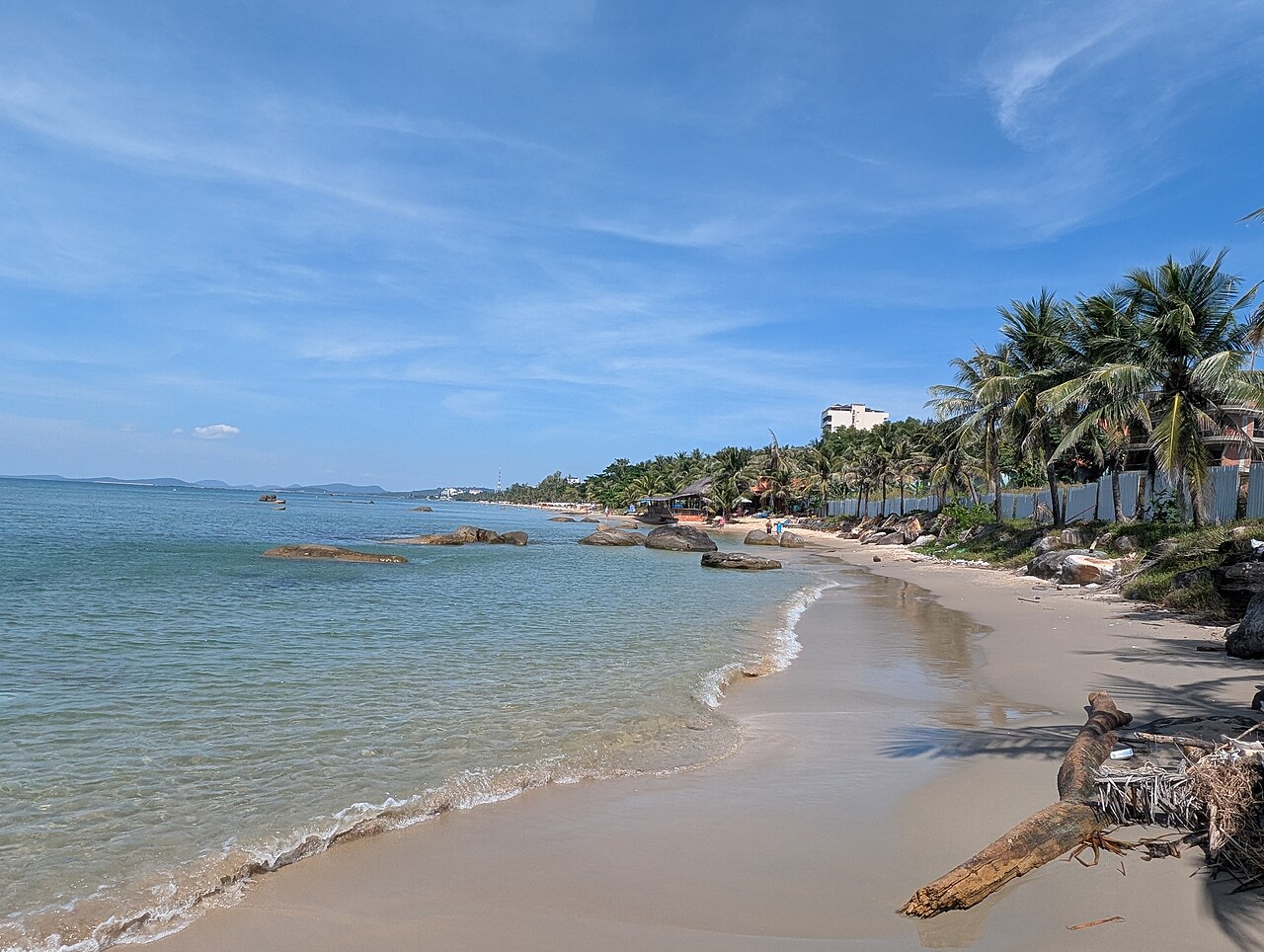
Phú Quốc is entering a popular travel window, but no season label guarantees beach weather on your dates. A four-day stay is easiest to manage when you choose one base, leave the sea excursion movable and keep an on-island alternative ready.
VietnamPlus/VNA estimated more than 8.57 million visitors to Phú Quốc in January–September 2026, up 30.5% year on year; that island-wide estimate supports booking fixed transport thoughtfully, but does not predict crowds at a particular beach.[1]
For the broader overview of island attractions, food and accommodation, see our Phú Quốc A-to-Z guide. This article focuses on weather flexibility for October and November. For official enquiries, the current local-government portal identifies the jurisdiction as Phú Quốc Special Zone (Đặc khu Phú Quốc), An Giang Province.[6] Older travel listings may use previous administrative labels, so follow the current address and meeting-point details on your accommodation or carrier confirmation.
What October and November mean for the island
Season labels are a starting point, not a promise. Vietnam Tourism’s climate guide groups Phú Quốc’s clearer, hot and sunny period as October–June, after describing July–September as stormier, hot and humid.[2] The same authority’s destination page lists November–April as the best time and says the rainy season runs May–October, with rougher seas and short heavy showers.[3] The pages do not use identical month boundaries. The practical reading is that October sits near the seasonal hinge; November is more squarely inside the destination page’s preferred window, but neither month guarantees unbroken sun.
| Month | Broad source guidance | Planning move |
|---|---|---|
| October | The climate guide starts its clearer/hotter window; the destination page still includes October in its rainy-season range. | Treat it as the more uncertain month. Reserve fixed transport and keep the marine day movable. |
| November | The destination profile begins its recommended November–April period. | Outdoor plans may be easier to arrange, but still check the current forecast and keep a backup. |
These are broad climate descriptions, not a forecast for 2026. Before a boat day, check the National Center for Hydro-Meteorological Forecasting’s official forecasts and marine bulletins, then confirm departure status directly with the carrier or tour operator. Recheck on the day; a seasonal average cannot determine whether one specific trip should go ahead.
A four-day itinerary that can change order
Think of this as four building blocks, not a fixed schedule. Keep the open-water day movable until you have a clearer local forecast. If you only have three days, drop one inland block rather than forcing two long excursions into one day.
Day 1: arrive, settle in and keep the evening easy
Choose one base and avoid scheduling a boat trip immediately after arrival. Dương Đông is a practical starting point if you want access to food and the night market; the official tourism profile places the Phú Quốc Night Market near Dương Đông.[3] If you are staying farther south or north, check the actual transfer time from the airport or ferry port before choosing an activity for the same evening.
Use the first evening to confirm the next day’s transport and learn where to find the operator’s official notices. If skies are clear, a west-coast sunset is a pleasant option; if rain arrives, keep dinner local and save the beach for a brighter window. There is no need to cross the island just to tick off a viewpoint.
Day 2: make the sea day conditional
If the forecast and local sea conditions are suitable, choose one main marine outing: snorkelling off the An Thoi archipelago, or the Hon Thom cable-car experience and nearby island activities. Vietnam Tourism describes these as Phú Quốc experiences, but specific boat routes, departures and facilities still require current operator confirmation.[3][4]
Ask what is included, how long you will be on the water, what happens if conditions change, where you board and whether the outing is appropriate for your group. Use an operator that provides clear safety instructions and lifejackets where relevant. If local operators or authorities advise against going out, do not treat a prepaid excursion as a reason to ignore that advice.
If the sea is not suitable, swap this day with an on-island option: a pepper garden, a fish-sauce producer that currently welcomes visitors, a meal, or a beach accessible by road. Confirm opening and access directly; a general tourism page is not a live operating schedule.
If you are staying in the north, our guide to Phú Quốc United Center is another place to consider. Check which activities are currently open and suitable for the weather, plus tickets and transfer time; it is not automatically a rain-proof plan.
Day 3: explore by area, not by island-wide checklist
Phú Quốc is larger than a single resort strip. Choose either a south-island day or a north-and-west day, based on where you are staying and what is currently open. For the south, the official tourism guide highlights Bãi Sao and the An Thoi archipelago; for the west and north it mentions Vũng Bầu, Ông Lang, Gành Dầu and Biển Bà Kèo.[4] These are useful starting points for a map, not a promise about road conditions, facilities or swimming conditions on a given date.
For more stop ideas, see our older Phú Quốc sightseeing roundup; it was published in 2020, so verify current access, opening hours and travel times before planning around it.
If you prefer an onshore day, make room for local food and the island’s agricultural and fishing heritage. Vietnam Tourism points visitors toward fish sauce, black pepper, the night market and the national park as part of Phú Quốc’s wider appeal.[3] Choose one or two stops and check visitor access, opening times and transport with the venue. This keeps the day enjoyable without treating local producers or working areas as open attractions by default.
Day 4: use the forecast, then leave a buffer
If the sea day was postponed, place it here only if current conditions and your operator allow. Otherwise, revisit a beach or activity you enjoyed, pick up local food or products, and leave enough time for your onward journey. If you are taking a ferry, avoid booking a tight onward connection that assumes a particular crossing will run at a particular time. If you are flying, check your airline’s current schedule and leave an appropriate airport buffer.
For a five-day stay, keep the extra day unassigned until you arrive. It is a useful weather reserve and often makes the rest of the trip feel less rushed.
Where to stay: choose one useful base
A central base around Dương Đông can simplify meals and evening plans, especially if you want to use the night market. A southern base may reduce transfers to An Thoi and Hon Thom activities, while a northern stay may suit travellers prioritising quieter beaches or time near forested areas. These are trade-offs, not universal rankings: verify the actual distance to your chosen activities, late-evening transport and current road access before booking.
Our 2022 roundup of four resorts on Phú Quốc’s southern tip may help you compare locations, but confirm each property’s current operation, facilities, rates and transfers directly.
Moving hotels every night rarely helps a short stay. One base for four nights makes it easier to shift your activities when the forecast changes. If you choose a remote resort, ask in advance about transfers, meal options and the cost or availability of getting to other parts of the island. Do not assume that every property provides a shuttle or that a map’s straight-line distance equals a short drive.
Getting to Phú Quốc and checking ferry details
Vietnam Tourism lists Phú Quốc International Airport and ferries from Rạch Giá and Hà Tiên as ways to reach the island.[3] Phú Quốc Express publishes Hà Tiên–Phú Quốc and Rạch Giá–Phú Quốc routes, with its own timetable and ticket portal.[5] These are examples, not a complete list of carriers or a guarantee that a route will operate on your date. Check the operator’s current schedule, departure and arrival ports, baggage rules and ticket-change terms directly.
Before leaving for a port, check the carrier’s status notice again and allow for the time it takes to reach the terminal. A ferry can be a scenic choice, but it makes your arrival dependent on the sailing and sea conditions. A flight may fit a tighter itinerary better, but flights have schedules that should also be checked with the carrier. Choose based on your dates, budget, luggage and tolerance for a disrupted connection—not on a blanket claim that one mode is always faster or safer.
Before you commit
- Check the official forecast for your exact dates, then recheck before a boat excursion.
- Confirm airport or ferry transfers and avoid a tight same-day onward connection.
- Book essential transport and lodging if your dates are fixed; leave marine activities flexible where possible.
- Ask tour operators about cancellation, rescheduling, safety equipment, inclusions and boarding point before payment.
- Confirm current opening hours and visitor access for farms, parks, markets and attractions.
- Choose one accommodation base that keeps your likely activities manageable.
- Keep a rain-friendly alternative, such as a meal, an open local producer or a low-travel day.
Is Phú Quốc worth visiting in October or November?
Yes, if you want an island break and can adapt the order of your days. October has a broad seasonal case in the official climate guide, while the destination profile’s more conservative “best time” begins in November.[2][3] That distinction matters most if your trip depends on several consecutive beach or boat days. For a short, fixed-date visit, place your must-do sea activity early enough to have another possible day as backup, and do not build the whole trip around one excursion.
The nine-month visitor estimate points to strong island-wide interest, but it cannot tell you what a specific hotel will cost or which beach will be busy.[1] Check availability directly, leave marine plans flexible and make room for the parts of the island you can enjoy in any weather. A good trip is not the one with the most activities; it is the one that leaves enough room for weather, distance and the pleasure of staying put for a while.