
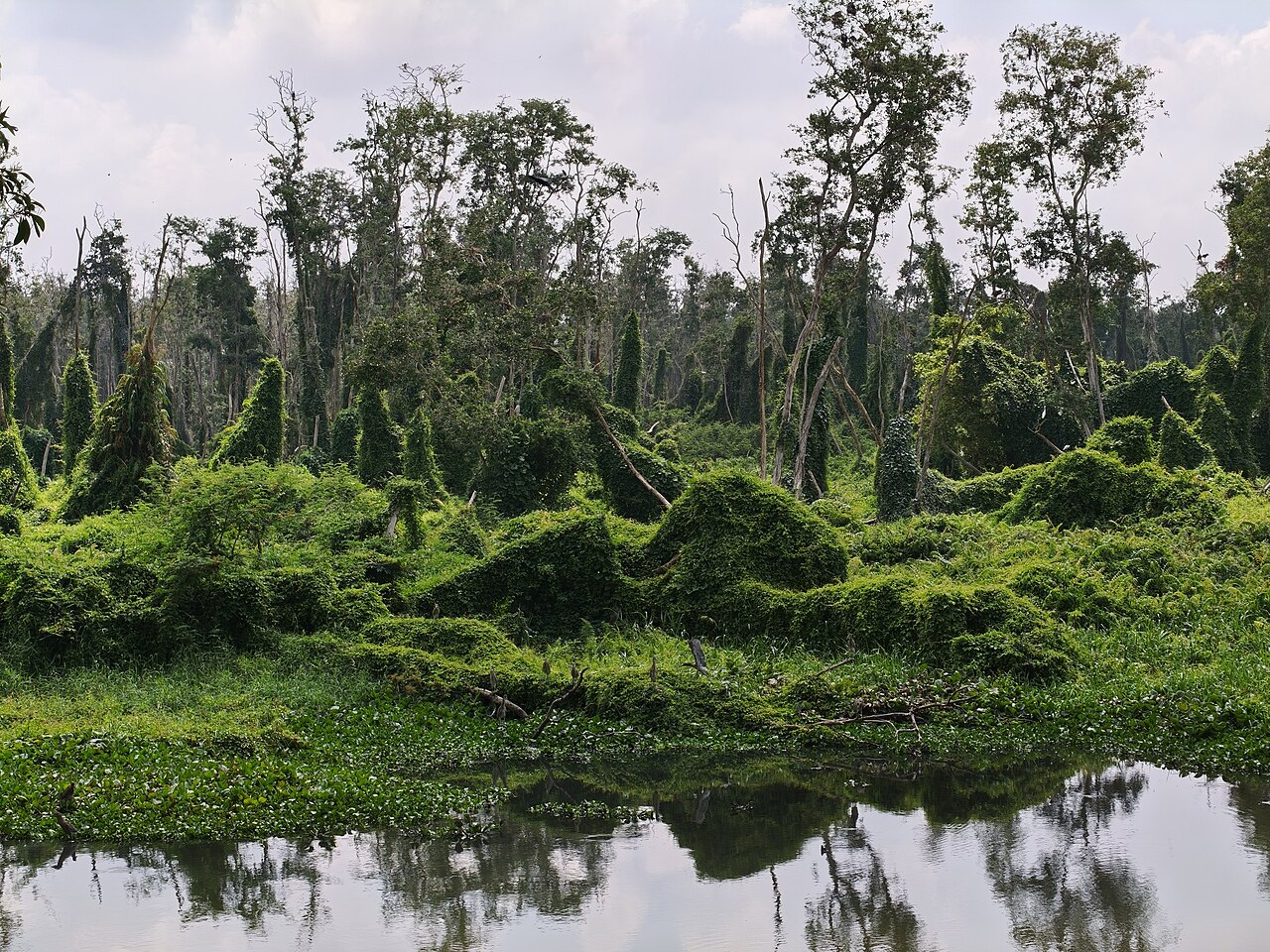
What “floating season” means—and what it does not
In the Mekong Delta, “floating season” is a familiar travel phrase for the annual high-water period. It describes a broad seasonal pattern, not a single event that arrives on the same date everywhere. Tuoi Tre News describes the usual flood season as roughly August through December. Vietnam Tourism describes September through November as a typical scenic period at Tra Su Cajuput Forest in An Giang. The two windows overlap, but neither predicts the water level at an individual canal, forest or boat landing this October. [2] [3]
A visitor may encounter water moving through wetlands, boats on waterways and seasonal produce or fishing activities. The exact scene depends on location, recent rain, upstream flows, tides and local operations. A high river reading at a Mekong mainstream station does not tell you whether a particular forest route is open, whether a boat can enter or what vegetation will look like on your visit date.
It also helps to distinguish the floating season from a floating market. The market is a place of trade on the river; the seasonal guide is about changing water, wetlands and community life. If you want a market visit, see the site’s separate Cái Răng Floating Market guide, which covers a different destination and search intent.
What 2026 reporting can—and cannot—tell you
A September report by SGGP describes seasonal tourism activity in Thuong Phuoc, Dong Thap. It says hundreds of visitors had come to a community-based floating-season experience over several days. An operator reported more than 50 visitors a day that season, compared with 20–30 per day over the comparable period a year earlier. That is a useful local signal that one initiative is attracting more visitors. It is not a count for the whole Mekong Delta, a forecast for the rest of 2026 or evidence of search volume. [1]
The same report mentions other seasonal community destinations, including Tan Loc Islet in Can Tho and Chau Doc Floating Village in An Giang. It does not establish which services are currently operating at those locations or whether independent visitors can join a tour. Treat them as leads to verify, not confirmed itinerary stops. [1]
For water conditions, Tuoi Tre’s August 2026 report provides context, not a current October reading. Officials quoted in that article described upstream levels as generally low to moderate at the time and noted that high tides can influence middle and downstream areas. Conditions can change after a report is published. Do not use its August observations to predict the water at Tra Su today. [2]
The Mekong River Commission publishes daily wet-season river-level forecasts and warnings for 22 points on the Mekong mainstream. That information can help you understand basin conditions, but it is not a local depth gauge or site-opening bulletin for Tra Su or a community tour. Pair it with a current check from the place you intend to visit. [4]
Choose one kind of experience
Tra Su: forest waterways and a protected wetland setting
Tra Su Cajuput Forest is described by Vietnam Tourism as an approximately 850-hectare wetland in An Giang. Its guide highlights the cajuput landscape and says the September–November period is usually scenic. That description is useful for understanding why travelers consider the site in the floating season, but it does not confirm 2026 water levels, current boat routes, open areas or operating hours. [3]
If Tra Su is your priority, contact the current site operator before you build the trip around a boat ride. Ask which areas are accessible on your date, whether water conditions alter the route, what time to arrive, how long the visit takes and what the current price includes. The older public pages sometimes quote hours or prices, but this guide does not repeat them as current facts.
Tra Su is best treated as a nature-focused visit, not a guarantee of a particular wildlife sighting or an uninterrupted “green tunnel” experience. Keep noise low, stay on the permitted route and do not feed or chase wildlife. If the boat route changes, follow the operator’s instructions rather than trying to find an alternate entrance yourself.
Thuong Phuoc: a community-led seasonal experience
The September 2026 SGGP report makes Thuong Phuoc the clearest current example of a local floating-season visitor experience in the sources reviewed. It describes community tourism and seasonal activities, but it does not provide a booking link, a fixed daily schedule or a visitor-access guarantee. Contact the named local organizer or a reputable operator to confirm what is offered on your dates and where the tour begins. [1]
Before paying, ask what the experience includes, how the boat trip works, what happens if weather or water conditions change, and whether food or local produce is part of the visit. Clarify the price directly with the operator; no current fare was independently verified for this article. Choose a host who explains the community’s rules and keeps guests within approved areas.
A community visit is not a licence to photograph people at close range or enter homes. Ask first, follow local guidance and let the host explain which parts of daily life are appropriate for visitors to observe.
Other seasonal locations need a fresh check
The press report also names Tan Loc Islet and Chau Doc Floating Village. Because it does not confirm current services, treat those as research starting points rather than guaranteed tour options. Ask a local tourism office or operator whether a visit is active, what is open and whether a guide is needed. Do not assume that a place name in a news article equals a public attraction with a daily schedule. [1]
Build a trip around one area, not a hurried checklist
For an An Giang-focused visit, use a base that works for your confirmed plans, then ask the Tra Su operator about current access and timing. Leave space for a local meal or a slower stop rather than adding distant destinations from an old online itinerary. If you also want the wider province context, the site’s An Giang travel guide is live and was originally published on 27 May 2022. Its descriptions can provide historical background, but its route instructions, administrative names, prices, opening times and seasonal advice may be outdated; check current details independently.
For a Dong Thap-focused visit, arrange the Thuong Phuoc community experience directly and confirm the meeting point, transport, duration and cancellation terms before you commit to the rest of the day. Do not combine it with a distant An Giang stop on a tight schedule unless you have independently checked the route and timing for your dates. This guide does not verify current travel times between those places.
If you have several days, choose one area as the anchor and keep a second activity optional. That is more useful than promising a fixed multi-province route when local water access and tours can change. Browse the live South Vietnam story archive for other regional ideas, but use current primary sources for any date-sensitive transport or operating information.
Check water, weather and operations separately
Three questions matter before a boat-based outing: what the broader river system is doing, what conditions are like at the specific site and whether the operator is running your route. The Mekong River Commission can help with mainstream river forecasts and warnings. It cannot answer the second or third question for a local wetland. [4]
Check the local site or community operator close to departure. Confirm whether the route is open, the meeting point, expected return time, safety arrangements and how cancellations work. If a trip is postponed after heavy rain, changing tides or unsafe conditions, do not pressure a boat crew to continue. A flexible land-based alternative is better than treating a seasonal boat ride as guaranteed.
On the water, use the safety equipment provided and follow the boat operator’s instructions. Keep phones and cameras secure, bring sun and rain protection, and carry drinking water in a reusable bottle where practical. Do not board an unregistered boat offered informally at the roadside. These are general precautions, not a substitute for the operator’s safety briefing.
Travel with the season, not against the community
Floodwaters support ecological and livelihood processes as well as tourism. Tuoi Tre’s explainer describes the benefits of a regular seasonal flood pulse and the problems associated with low or delayed water, while also noting that floods can become damaging when they are unusually deep, fast or prolonged. The goal is not to romanticize every flood or assume that high water is harmless. Local conditions and official warnings matter. [2] [4]
Choose a community experience that explains who is hosting it and how visitors should behave. Keep to marked waterways, do not throw food or rubbish into the water and avoid disturbing birds or aquatic plants. Pay the agreed amount through the host rather than bargaining with individual residents who have not offered a service. Ask before photographing people, homes, fishing gear or working boats.
The phrase “floating season” can make the Delta sound like a scenery set. It is a working landscape. A good visit gives local people room to decide what they share and lets natural conditions shape the route.
Common questions
Which months are usually called the Mekong Delta floating season?
Tuoi Tre describes the broad annual flood season as roughly August–December. Vietnam Tourism gives September–November as Tra Su’s usual scenic period. These are typical windows, not a guarantee of water levels or access in 2026. [2] [3]
Is Tra Su guaranteed to have high water in October 2026?
No. The Vietnam Tourism guide describes a typical seasonal window, but no date-specific 2026 water-level or route report for Tra Su was verified. Check directly with the site operator before travelling. [3]
Is the floating season the same as visiting a floating market?
No. A floating market is a trading place on the river. A floating-season trip focuses on seasonal water, wetlands or community activities. For Cái Răng, use the separate market guide.
Is the recent increase in visitors a Delta-wide tourism trend?
No. The reported increase concerns one community initiative in Thuong Phuoc. It is evidence of local seasonal interest, not a basin-wide visitor count, forecast or search-volume estimate. [1]
How can I check current river conditions?
Use the Mekong River Commission’s forecasts for mainstream basin context, then confirm site access and boat operations directly with the local destination or tour operator. The MRC forecast points are not a substitute for a local site update. [4]