
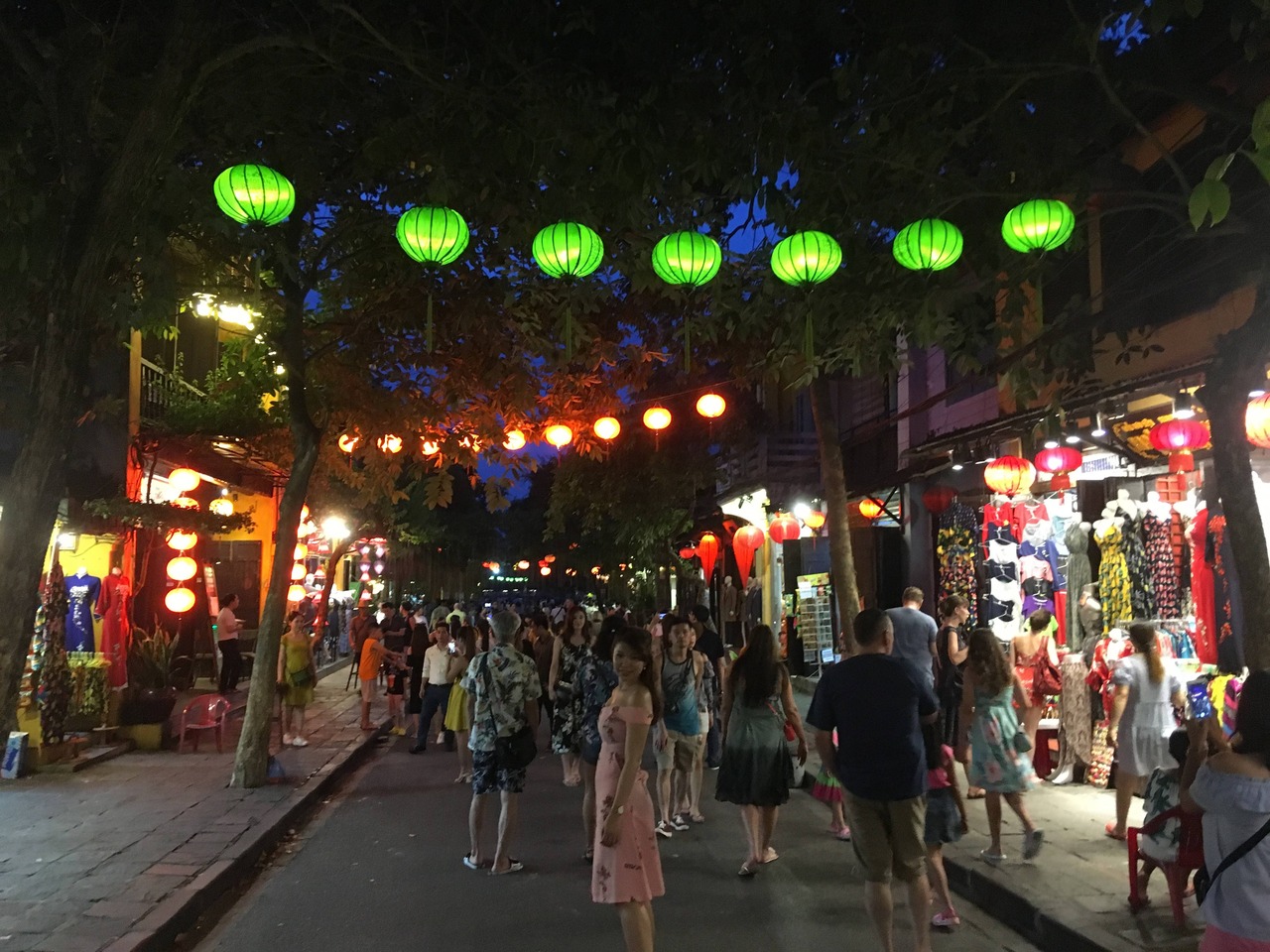
Dates, theme and what is actually announced
The planned festival dates are Thursday 3 December through Sunday 6 December 2026. The theme, “Hoi An – Colours of Heritage,” connects the visual language of lanterns with the town’s craft traditions and historic identity. Vietnam News, carrying a report from the Vietnam News Agency, says the programme is intended to preserve traditional lantern-making, promote cultural heritage and expand creative spaces in Hoi An. (Vietnam News/VNA)
The announced setting is broad but compact enough to explore on foot in sections: Hoai River Square, An Hoi Sculpture Garden, the Hoai River frontage and streets around the Ancient Town. Tuoi Tre describes a space with around 15 large-scale artistic lantern clusters, alongside lantern-making workshops and a culinary space showcasing Hoi An flavours. The same report says an exhibition area is expected to remain open until the First Full Moon Festival of lunar 2027. That is a statement about the planned continuation of an exhibition space—not a promise that every festival activity continues after 6 December, or that the display has a fixed Gregorian closing date. (Tuoi Tre News)
Vietnam News lists Lanterns and the Art of Rebirth, the Colours of Heritage art programme and Minh Dang Da Hanh, translated in its report as “Travelling by Night with a Bright Lantern,” among the planned offerings. Tuoi Tre also mentions an opening ceremony with performances on land and on the river, a discussion about Hoi An’s traditional crafts, and photography and lantern-pattern design contests. These are announced programme components; their exact times, locations within the festival zone and participation requirements still need confirmation.
Which dates should you choose?
Choose 3–6 December if the festival itself is the reason for your trip. Since the verified announcements do not yet provide a full day-by-day programme, the most sensible date choice is based on how much flexibility you have rather than on a guaranteed “best night.”
- One night: Pick the date that fits your wider Central Vietnam route, then leave room to revisit the river and Ancient Town if a particular activity is scheduled at a time you want to see. Do not assume the opening ceremony, procession or workshops happen every night.
- Two nights: This is the more forgiving option. Use one evening for the riverfront and lantern installations, and keep the second for a workshop, exhibition or performance once the official detail is released. It also gives you a better chance of adapting to rain or heavy pedestrian traffic without turning the visit into a race.
- Three or four nights: This suits visitors who want the festival alongside ordinary Hoi An experiences, food and heritage streets. It does not guarantee four different headline programmes; the detailed schedule is not yet verified.
If your trip falls outside 3–6 December, you may still encounter the planned exhibition installation for longer, because Tuoi Tre reports that it is expected to remain until the first full moon of lunar 2027. Treat that as a possible extended viewing opportunity, not as an alternative festival date. The festival’s four-day programme remains 3–6 December in the announced plan.
For evergreen background, see 20 must-try experiences in Hoi An; it is not a 2026 timetable.
An optional, separate boat-and-craft experience
If you also want a short river outing, Klook lists an independent private lantern boat ride and floating-lantern making class. It is not a traditional silk-lantern workshop, the festival’s official workshop or a festival admission ticket. The basic package has a two-person minimum and no hotel transfer; check the exact meeting point and weather arrangements. On 12 November, its listing showed 4.8/5 from 47 reviews, and a two-person quote completed for 4 December at 17:30. Availability can change; do not book it across a festival performance you want to attend.
Affiliate disclosure: Say Hello Vietnam may earn a commission if you book through this link, at no extra cost to you. Check the optional Hoi An lantern boat ride and floating-lantern class on Klook. This separate commercial experience does not provide official festival access or confirm festival workshop availability.
A practical way to explore the festival zone
Think in walking zones, not in a route measured by invented distances. Start in daylight at one edge of the announced area, identify the river crossings and the least crowded way back to your accommodation, then make a second pass after dark. A workable sequence is:
- Daylight orientation: Begin near Hoai River Square or An Hoi Sculpture Garden. Look for signs, workshop information and any access guidance before the evening crowd builds. This is also the best time to notice uneven paving, kerbs, steps and narrow approaches that are harder to read under decorative lighting.
- Riverfront loop: Follow the Hoai riverfront at a comfortable pace, pausing for installations rather than trying to see every display in one continuous push. Keep the route flexible: the announced venues span both open spaces and streets, and crowd management may alter the most convenient direction.
- Ancient Town streets: Continue into the heritage streets when you are ready for the denser part of the experience. Keep a meeting point outside the busiest lanes if you are travelling with children or a group.
- Return plan: Arrange a pickup point outside the most congested streets. Ask your driver or accommodation to confirm a practical landmark rather than assuming a vehicle can reach the riverfront or a narrow Ancient Town lane.
Workshops, exhibitions and the procession
A lantern-making workshop can be a good choice if you want an active, craft-based visit rather than only illuminated scenery. The announcements confirm workshops are planned, but they do not yet establish whether places require advance registration, whether a fee applies, how long a session lasts or whether walk-ins will be accepted. Check the organiser’s current instructions before building your evening around one.
The Lanterns and the Art of Rebirth exhibition offers a slower alternative to the outdoor displays. If the reported extended installation period is confirmed in final visitor information, it may be the element most suitable for a daytime return visit outside the four main festival dates. Again, the continuation refers to an exhibition space, not automatically to workshops or performances.
The Minh Dang Da Hanh activities are part of the announced programme, but the verified reports do not yet give a procession route or start time. Avoid promising yourself a particular riverside viewpoint until an official schedule and crowd guidance are published. The same caution applies to the opening ceremony, river performances, culinary space and art programme.
For broader destination context, browse Stories from Central Vietnam; use the event sources below for this festival’s announcements.
Access, transport and weather planning
Ask your accommodation about the most practical step-free approach to the areas you want to visit. “Ancient Town” is not a single surface: routes can include paving changes, kerbs, bridges, narrow lanes and crowded thresholds. If you use a wheelchair, mobility aid or stroller, ask specifically about the route to Hoai River Square, An Hoi Sculpture Garden and the riverfront, and whether a companion can wait at a clear pickup point. The currently verified festival announcements do not publish an accessibility map.
For transport, plan to be dropped off and collected outside the dense pedestrian streets unless local instructions say otherwise. Save a landmark in Vietnamese as well as your accommodation name, and confirm whether your vehicle can reach it at the time you need. Do not rely on a vehicle entering the festival’s busiest areas simply because a map shows a road nearby.
December weather can affect outdoor plans, but this guide does not make a forecast. Bring a light rain layer and footwear that remains comfortable on potentially wet or uneven surfaces. If rain arrives, prioritise the exhibition or indoor craft activity if one is operating, then revisit outdoor installations when conditions improve. The final rain arrangements and any changes to programme timing need to come from the organisers; no verified weather contingency timetable is available yet.
Photographing lanterns respectfully
Lanterns are designed for shared public enjoyment, so leave room for people moving through the display areas. Lower a bright screen or lamp near faces, ask before photographing workshop participants or vendors closely, and avoid blocking a bridge, doorway or procession route for a long exposure. If a contest or special photography area is announced, read its rules rather than assuming ordinary visitor photos are eligible.
The most reliable plan for now is simple: reserve 3–6 December for the inaugural festival, use daylight to understand the walking zone, keep at least one evening flexible, and verify the detailed programme and any component reservations before departure. The festival’s concept is clear; the operational details are still being finalised.
Sources and fact-check
Fact-checked 12 November 2026 against the Vietnam News/VNA report dated 29 October 2026, the Tuoi Tre News report on the first edition, and the Da Nang tourism portal’s festival page. Before travelling, check the final timetable, component admission or reservation rules, and any transport or weather notices from the organisers.