
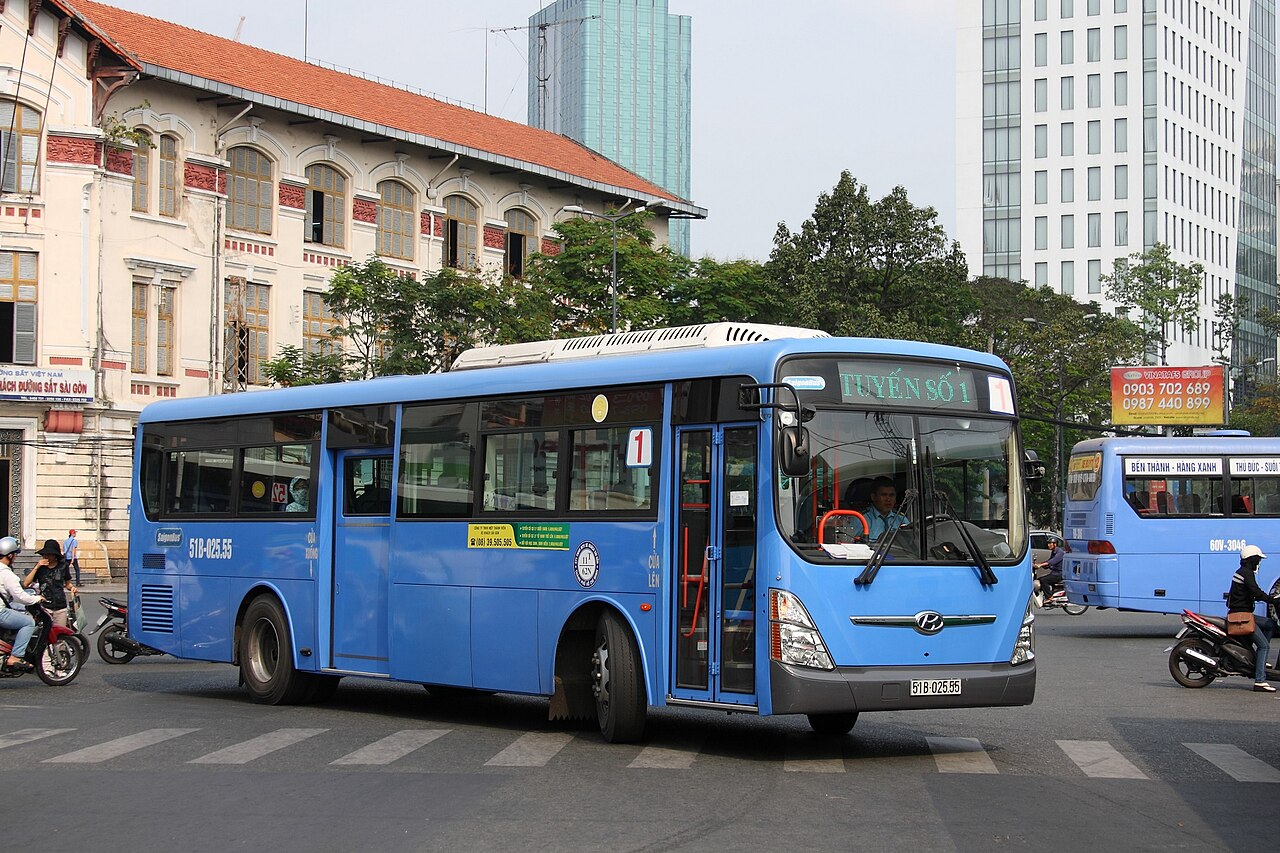
The free-bus policy can make local trips easier to budget, but it is not a blanket pass for every service in the city. The practical change for visitors is the check-in step: have a supported payment card or wallet ready, confirm the route, and treat airport or special sightseeing services separately.
Which buses are free?
The current programme is reported to cover 134 subsidized intra-city routes through the end of 2026. An October 2 report by Báo Xây dựng, based on observations and information from the Ho Chi Minh City Public Transport Management Center, confirms that phase two is operating and that 134 subsidized routes carried passengers under the scheme before the changeover. [1]
The Government News report on the city policy describes the exemption as limited to eligible subsidized intra-city routes. It specifically excludes inter-provincial routes, open-top sightseeing buses and airport shuttle services. That means a bus leaving from the same terminal—or appearing in the same trip-planning app—may not share the same fare status. [2]
Do not assume that all buses, transfers or services with “city” in their name are free. Confirm the specific route’s current eligibility at the stop, with the operator or through the latest notice from the Public Transport Management Center. The policy is scheduled to end on 31 December 2026; no extension is assumed here.
How to validate a free-bus trip
Trip verification became mandatory on 1 October. The city’s stated purpose is to record passenger trips so the programme can be measured and subsidies calculated. The city official quoted by Tuoi Tre said the validation tap records a trip rather than charging the passenger a fare. [2][3]
1. Plan the route, then verify eligibility
MultiGo describes itself as Ho Chi Minh City’s official public-transport app. Its English route-finding guide says the tool can show bus route numbers, boarding and drop-off points, walking distance, estimated waiting time and transfer suggestions. Use a current route planner to compare options, but do not treat a route suggestion or displayed fare as proof that the journey qualifies for the subsidy. Check the latest route notice and confirm with staff when uncertain. [4]
If the app is not available on your device, use the route information at the stop and ask the attendant before boarding. Route schedules and service patterns can change; recheck on the day rather than relying on a saved screenshot or an old travel itinerary.
2. Have a check-in method ready
The October 2 report lists public-transport cards, QR/identity methods, bank cards and e-wallets among the verification options. For foreign visitors, a contactless EMV bank card such as Visa or Mastercard, or a compatible phone wallet, is the most clearly documented option in the sources checked for this guide. City reporting has named Apple Pay, Google Pay and Samsung Pay; acceptance can still depend on the reader and card, so carry a backup method if possible. [1][3]
At boarding, follow the instructions for the validator and tap the card or phone as directed. If you use a phone wallet, make sure the correct card is selected and the device is ready for contactless use. A digital wallet tap is a trip-validation step under the reported free-fare scheme, not a purchase of a paid ticket. The city says the trip is recorded for transport planning and subsidy accounting. [1][3]
3. Ask for help before the bus leaves
The October operational report says attendants were assisting passengers at the terminal and on buses. If your card or phone is not recognized, tell the staff member before the bus departs and ask which accepted method applies to that route. The same report says passengers who do not validate may be refused service, so do not assume you can board first and sort out the tap later. [1]
Foreign visitors do not need to rely on a Vietnamese citizen-ID QR code if they have a supported contactless card or wallet. The city’s transport center has also listed international cards as a way for foreign riders to validate; check the latest notice if you are unsure whether your issuer or wallet is compatible. [1][3]
What the free-fare programme does not include
The clearest published exclusions are:
- Inter-provincial buses that cross the city boundary.
- Airport shuttle services. Do not assume an airport-bound bus is covered because it stops in the city.
- Open-top sightseeing buses. These are distinct from ordinary city buses.
These exclusions come from the Government News summary of the city’s fare policy. Because route designations and services can change, check the exact service name and route before travelling. If you are planning an airport trip, budget for a paid shuttle or another transport option unless the operator confirms otherwise. [2]
A multi-leg journey also deserves a check: each segment may use a different route or service type. Confirm every bus in the itinerary instead of assuming a free first leg makes the entire trip free.
A practical visitor workflow
Before leaving your hotel, enter your starting point and destination in MultiGo or another current route planner. Note the route numbers and stop names, then compare that plan with the signs at the stop. Ask whether each service is part of the fare-free scheme, especially if the journey includes an airport, crosses into a neighboring province or uses a tourist-oriented bus.
Keep a supported contactless card or wallet ready, but retain a backup card if you have one. When you board, use the validator as instructed. If you are unsure whether the tap registered, ask the attendant rather than tapping repeatedly or assuming the trip was recorded. Leave extra time for transfers and verify live arrivals; this guide does not promise any particular wait time or frequency.
A useful mental model is route first, eligibility second, validation third: plan where you want to go, verify that each service is covered, then complete the required check-in. “Free” describes the fare on eligible routes during the policy window; it does not mean every route is included or that route planning can be skipped.
Eligible free buses remain a practical option on covered routes. If you would prefer a private, customizable city itinerary, you can compare Klook’s Ho Chi Minh City car-with-driver charter, with 4-, 8- or 12-hour options. Confirm your chosen route and any distance or overtime surcharges with the operator; this is a city charter, not an airport transfer. Disclosure: Say Hello Vietnam may earn a commission if you book through this affiliate link, at no extra cost to you.
For sightseeing context, see our one-day Ho Chi Minh City landmarks itinerary, first published on 21 March 2023. It is an older sightseeing article, not a current bus timetable or source for fares, route availability or attraction hours. For more ideas around the south, browse the South Vietnam story archive; check the date and current details of each individual story.
Frequently asked questions
Are Ho Chi Minh City buses free for tourists in 2026?
The city programme covers eligible subsidized intra-city routes through 31 December 2026. The October 2 report describes 134 covered routes. Tourists are included in the city’s free-travel policy, but must validate their trip from 1 October and should confirm that the individual service is eligible. [1][2]
Do foreign visitors need a Vietnamese ID card?
The sources checked say foreign passengers can validate with supported contactless international bank cards such as Visa or Mastercard, including compatible digital wallets. Confirm acceptance on the route and follow the reader instructions. [1][3]
Will tapping a bank card charge me?
The city transport official quoted by Tuoi Tre said the tap is for trip recording and does not charge a fare during the free-fare scheme. The policy still requires a validation step on eligible routes. [3]
Is the airport bus free?
The Government News report lists airport shuttle services among the exclusions. Verify the exact service with its operator before boarding. [2]
Does the programme continue after 31 December 2026?
The sources checked for this guide describe the fare-free programme through 31 December 2026. This article does not assume or promise an extension. Recheck official announcements for any later policy change.