
When Hanoi’s cúc họa mi usually bloom
The small white flowers called cúc họa mi are a short seasonal subject in Hanoi, not a permanent attraction with a reliable ticket calendar. A 12 October 2026 seasonal overview places the usual flowering period from late October to early December and says the most beautiful stage is generally mid-to-late November [1]. That is useful for choosing a travel window, but it is not a field report: it does not confirm that a particular plot is open, flowering or photographable on 19 October.
That distinction matters in a city where flower production shifts between plots and villages. The official Vietnam National Administration of Tourism describes Tây Tựu as a flower-growing area west of central Hanoi and says its farms grow, among other flowers, chrysanthemums; its report is about a 2020 Tet period, not the 2026 cúc họa mi crop [2]. These are evidence of horticultural landscapes and local context, not permission to walk into any field.
So plan around a season and a conversation, not a landmark pin. The ethical aim is to make a good photograph without turning working land, vendors or residents into an unconsenting backdrop.
Choose one compact outing, then keep a backup
A practical first outing is the West Lake–Red River side of the city. Nhật Tân, Quảng An and Tứ Liên appear in current seasonal travel coverage because flower-growing areas and vendors cluster in this broad northern part of Hanoi [1]. The Red River rock-garden area is another named photography lead, while the older official tourism report links Quảng An’s flower market with flowers from nearby Nhật Tân [2]. In reality, roads, plots and cultivation patterns change. Ask a local vendor, accommodation host or the farm itself which plot is welcoming visitors this week.
Tây Tựu is a different choice: a flower-producing area farther west, with a stronger agricultural identity than a quick city-centre photo stop [2]. It may suit a half-day visit if a grower confirms a field and you can travel without rushing. Do not assume that a chrysanthemum farm grows the white daisy variety at the same time as another farm, or that a field photographed in a previous year remains in the same location.
Build the day in two layers:
- Primary stop: one confirmed, permission-based field or vendor area.
- Low-impact fallback: a public street scene with a flower bicycle or a market-side purchase, only where photography is welcome.
The fallback protects both your time and the growers’ work. It also avoids the common mistake of arriving at a field, seeing a crowd, and treating crowd presence as permission. If no one can confirm access, photograph flowers from a public edge or buy a small bunch instead of entering.
Pick the date without pretending to predict a bloom
For late October, expect a higher chance of early or partial flowering; for mid-to-late November, seasonal evidence suggests the strongest visual window; early December may still work, but it is not guaranteed [1]. Weather, planting dates, cutting schedules and plot turnover can all change the scene. A white field is not a citywide switch that turns on everywhere at once.
Contact the intended grower or local guide shortly before the outing and ask four plain questions: Is cúc họa mi flowering now? Which exact plot welcomes visitors? May I take photographs, and under what conditions? Is there a locally set entrance or photography charge? Record the answer and the name of the contact, then re-check if heavy rain or a major weather change intervenes. A direct answer is more useful than a fee or opening time copied from an old travel post.
Go early enough to work quietly and avoid creating a queue, but do not claim that a particular hour is officially best unless the site tells you. A soft-light preference is a photographer’s choice, not a farm’s operating schedule. Keep a rain layer and shoes that can handle damp soil; do not cross planting beds to keep equipment dry.
A respectful field-photo checklist
Ask before you enter. A cultivated plot is someone’s workplace, whether or not it has a sign or ticket booth. Greet the grower, explain that you would like a few photographs, and wait for a clear yes. If permission is conditional—stay on a marked edge, avoid a particular bed, limit group size—follow that condition. If no one is available to answer, do not enter.
Stay on the route you are given. White flowers invite a low angle and a “surrounded by blooms” portrait, but that perspective is not worth flattened plants. Keep feet, tripods, bags and scooter stands off beds, irrigation lines and plastic-covered soil. Use a longer lens or crop later. Never pull stems toward a camera, rearrange pots, or pick a flower unless the grower explicitly offers it.
Leave the scene as a farm, not a set. Do not move signs, baskets, hoses or tools for a cleaner frame. Keep voices low and turn off flash if it distracts people. A drone is especially inappropriate without explicit permission from the landholder and compliance with Vietnamese aviation rules; a small camera does not make a field owner’s consent unnecessary.
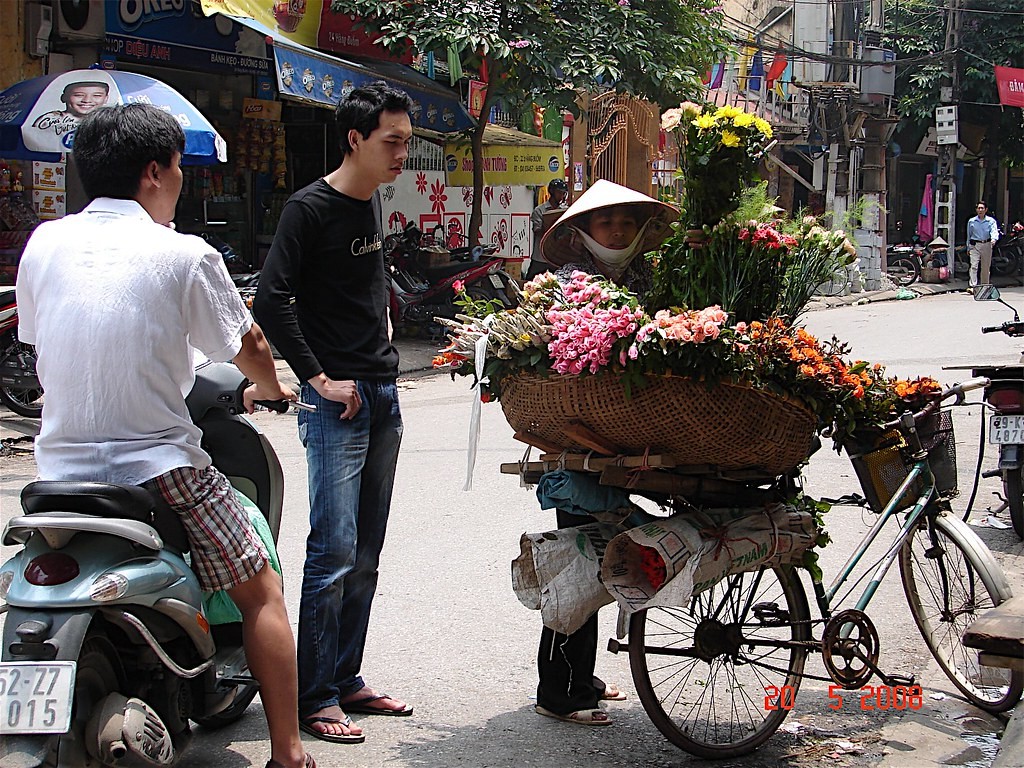
Separate flowers from people. A vendor pushing a flower bicycle can be a powerful Hanoi scene, but a person is not an accessory. Ask before photographing a face, especially a child. Offer to show the image, and do not publish a recognisable portrait when the person declines. For a candid street frame, compose around the flowers, bicycle and surroundings rather than waiting for a stranger’s face to become the subject.
Pay transparently and buy locally. If a grower states a fee, ask what it covers and pay it to the person responsible; do not bargain aggressively over a small access charge. Buying flowers from a vendor is a direct, low-impact way to support the seasonal trade. A purchase is not automatic permission to enter a field or use someone’s portrait commercially.
Carry out every extra. Plastic sleeves, drink cups, floral wire and snack packaging do not belong in a planting bed or on the riverbank. Use a refillable bottle where practical, and do not trample a verge to reach a better background. Leave pets at home unless the grower expressly allows them; dogs running through beds can damage a crop and unsettle workers.
Photograph the season without misleading readers
Label the image honestly. An old street photograph can illustrate Hanoi’s flower trade, but it cannot prove a 2026 bloom, current access or current farm conditions. This guide’s lead photograph was made in May 2008 and shows mixed bouquets, not a white-daisy field; it illustrates the street-vendor alternative only [3]. If you post your own work, include the date, general area and whether the image was made from a public edge or with permission. Avoid captions such as “Hanoi is in full bloom today” when you have only seen one plot.
Respect the difference between a personal travel photograph and a commercial shoot. A small camera and one companion may be welcome where a styled session with models, lighting and multiple tripods is not. Ask specifically about reels, livestreams, paid campaigns and posed portraits; “taking photos” may not cover every use. Credit a grower or vendor if they request it, but do not publish a private phone number or exact home address without consent.
For an efficient kit, bring one camera or phone, a spare battery, a compact lens cloth, and a lens that can frame flowers from the edge. A polarising filter is optional; a respectful distance is not. Let the flowers remain the subject rather than using editing to imply a larger field, earlier date or untouched landscape than you actually saw.
A simple outing plan for late October–November 2026
Before booking transport: choose two candidate areas, contact the first, and save a backup that can be enjoyed without field entry. Check the latest local response rather than relying on a recycled map pin. Keep the day flexible enough to turn around if the plot is closed, harvested or muddy.
On arrival: orient yourself from a public road, identify the person responsible for the plot, ask permission, agree where to stand, and pay or purchase only through the stated local arrangement. Photograph a few frames, review them at the edge, and move on rather than occupying the best patch for an hour.
Before leaving: check the ground for your own litter, thank the grower, and ask whether credit or a link is appropriate. If the scene is crowded, choose the public-edge composition or the flower bicycle rather than adding to pressure inside the bed.
Afterward: caption the date and conditions, distinguish an archival illustration from a live 2026 observation, and do not geotag a fragile private plot if the grower asks you not to. The best souvenir is a photograph that leaves the crop—and the relationship—with its owner intact.
A city-centre activity after the flower outing
Put the flower outing inside a wider Hanoi stay
For broader orientation, use our Hanoi travel guide, first published on 22 March 2020. It is useful background, not newly verified transport, prices or venue access. The North Vietnam story archive helps you compare nearby destinations; check each story’s date rather than assuming its logistics are current. Our older Hanoi autumn overview, published on 23 May 2024, covers the wider city mood. This guide instead focuses on the short white-daisy window and how to visit working flower plots without damaging them.